

Agree on the rules before you go
Decide together which costs are shared (accommodation, car rental, group dinners) and which are personal (souvenirs, a museum only some of you visit). Also agree whether shared costs are split equally or by who took part.
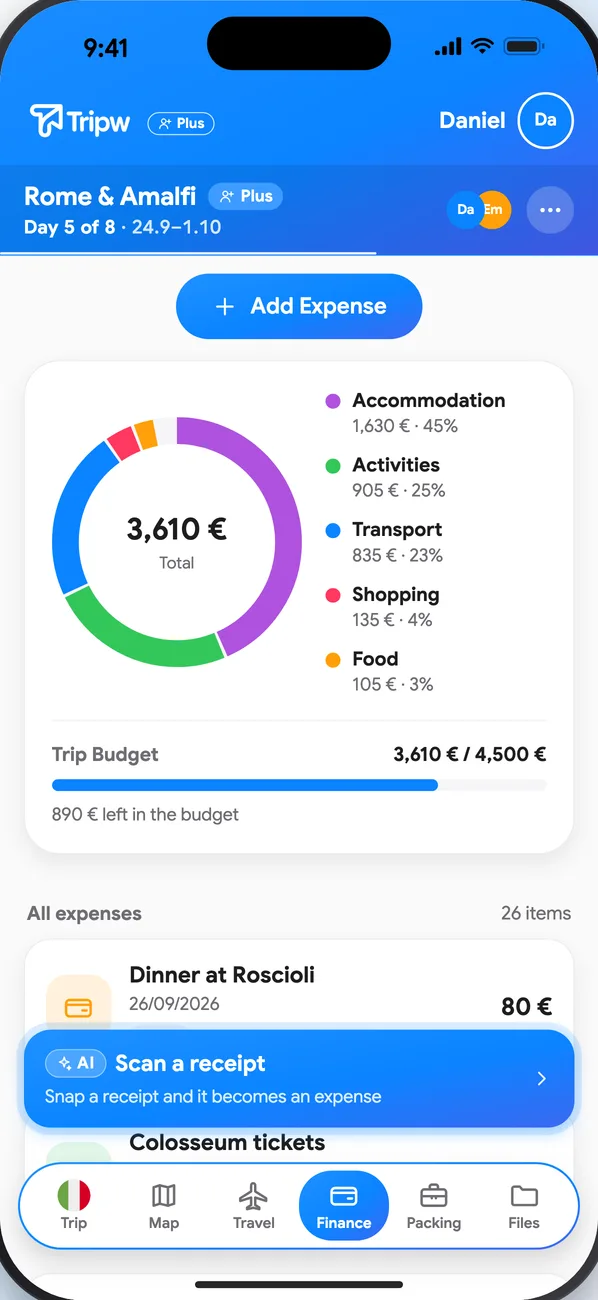
Set a budget per person
A rough budget per person helps everyone choose restaurants and activities that suit the whole group. It also makes it easier to notice early when the trip is running over.
Record every expense when it happens
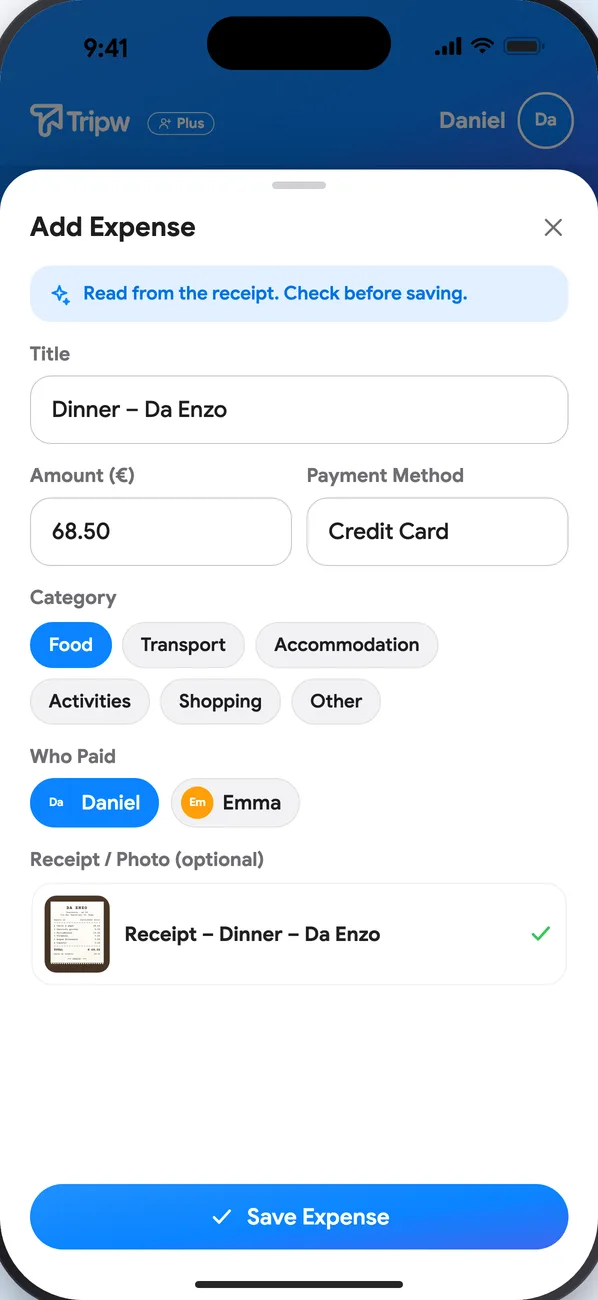
The single most useful habit: whoever pays logs the expense straight away — what it was, how much, who paid and who it is split between. Waiting until the evening (or the flight home) is how receipts get lost.
- Photograph receipts; in Tripw a scanned receipt becomes an expense.
- Record the amount in the currency you actually paid.
- Add bookings made before the trip — flights and hotels count too.
Handle multiple currencies
On trips abroad some costs are paid at home and some locally. Keep each expense in its original currency and convert everything to one currency for the final balance, so nobody has to do exchange-rate maths.
Settle up once, at the end
Instead of paying each other back after every meal, let the balances add up and settle once. A balance view that shows who owes whom — and how much — turns a long list of expenses into a few transfers.
Keep it transparent
When everyone can see the same list of expenses, questions get answered before they turn into arguments. In Tripw, every member of the trip sees the expenses, the budget and the balance between members.
