

1. Agree on the basics first
Before anyone opens a booking site, settle three things together: dates, a rough budget per person and the kind of trip — city break, beach, road trip. Most group-trip arguments start because these were never said out loud.
A quick poll works better than a long thread: offer two or three date ranges and let everyone vote.
2. Pick a destination that fits the group
Look for places that offer something for everyone: a city with both museums and a beach, or a base from which people can split up for a day. Direct flights from where most of the group lives save a lot of coordination.
3. Share the work
One organiser doing everything burns out. Give each person a job: one books the accommodation, one handles transport, one researches restaurants. Keep the tasks in a shared list so everyone can see what is done.
4. Build a loose day-by-day plan
Plan one or two fixed things per day — a museum slot, a dinner booking — and leave the rest open. Groups move slower than individuals; a plan that looks relaxed on paper is usually just right.
- Put timed bookings in the schedule with their times.
- Mark optional activities so people can opt in.
- Plan at least one afternoon where the group splits up.
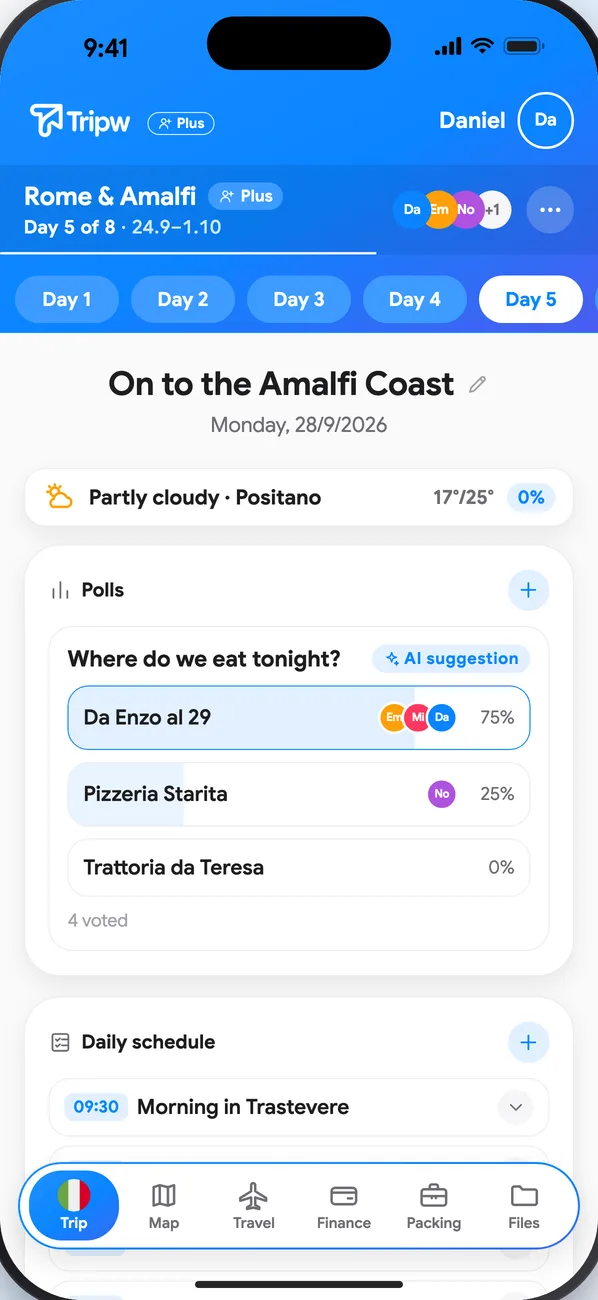
5. Decide things with polls, not threads
Which restaurant, which day trip, early start or late start — put it to a vote with a deadline. Once it is decided, it goes into the plan and the discussion is over.
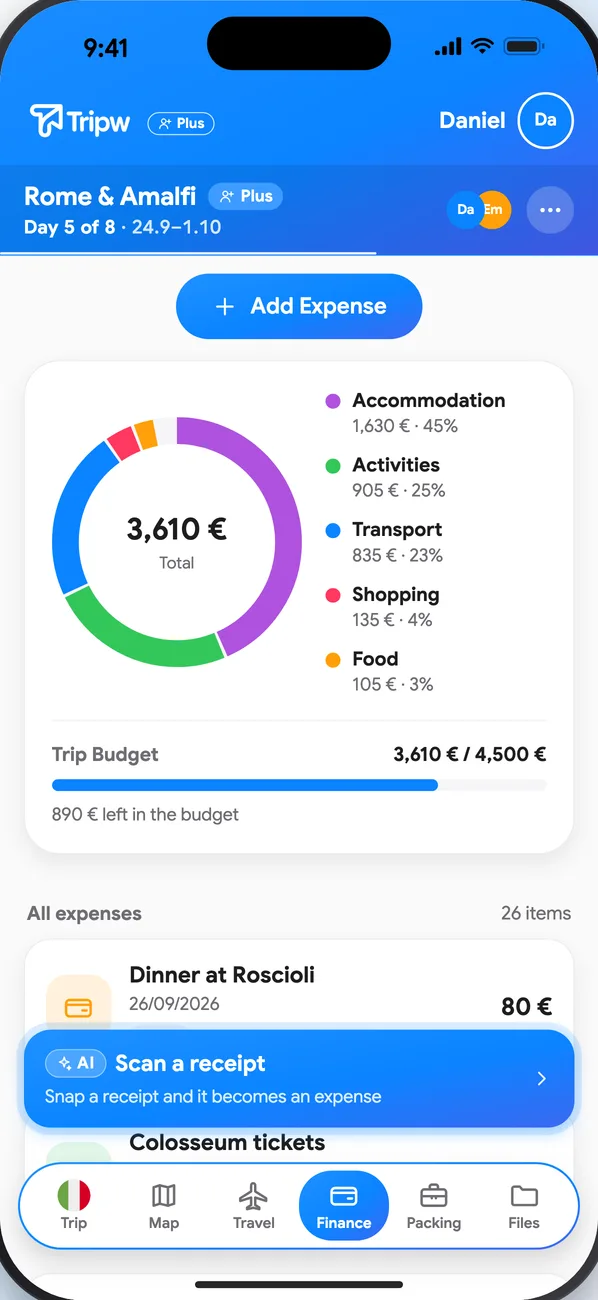
6. Track money as you go
Decide up front how shared costs are split, record each expense when it happens, and settle once at the end. It avoids the awkward reconstruction at the airport. (There is a separate guide on this.)
7. Keep everything in one place
Flights, the accommodation address, tickets and the plan for each day should live somewhere everyone can open — also offline. In Tripw, everyone who joins the trip sees the same itinerary, polls, tasks, documents and expenses.
